Understanding prescription labels
- January 23, 2026
Have you looked closely at your prescription medication labels? There is a lot of information in that tiny space. Here’s a breakdown of what each section means, using the example shown in the image below.
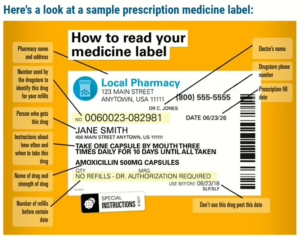
Pharmacy information
The top section lists the pharmacy’s name, address and phone number. The direct contact number is the one to call if you have questions about your medications, such as possible side effects, drug interactions, dosage or refills.
Prescription number
This unique number is used by the pharmacy to identify your medication. Giving this number helps locate your prescription record when you need a refill.
Patient’s name
The label includes your name and sometimes your address to ensure the medication is meant for you. Never take medicine with someone else’s name on it. After you have taken all the medicine in the bottle, it’s a good idea to remove the label or mark through the information before throwing the bottle away or recycling it.
Directions for use
This section tells you how and when to take the medicine. For example, “Take one capsule by mouth three times daily for 10 days until all taken.” Follow these directions exactly to get the intended benefit and avoid mistakes. Ask your pharmacist what to do if you miss taking your medication as directed.
Medication name and strength
Here you will see the drug’s name (Amoxicillin) and its strength (500 mg). This is very important when checking for allergies or confirming you received the correct medicine.
Refill information
The label shows the number of refills you can get before a certain date. If it says, “No refills – Doctor authorization required,” you or your pharmacy will need to contact your doctor for more medication.
Special instructions
Some labels include an extra section for special instructions, such as taking the medicine with food, avoiding alcohol, sun exposure, or storing it in a cool place. Always read and follow these instructions carefully.
Doctor’s name
The prescribing doctor’s name is listed, so you know who authorized the medication. This can be important if you need to ask for refills.
Prescription fill date
This is the date your prescription was filled. This can help you track when it’s time for a refill.
Expiration date
The “Use before” date tells you when the medicine may no longer be effective or safe. Do not take the medication past this date. Some labels will include a date when you can no longer refill the prescription.
There are two categories of medications: controlled and noncontrolled. A controlled substance is a medication that can cause physical and mental dependence. The federal Drug Enforcement Administration (DEA) regulates and classifies these medications and includes restrictions on how they can be filled and refilled. Controlled prescriptions are valid for six months from the date written. Noncontrolled prescriptions are valid for up to one year from the date written.
Not every prescription label will have all the information listed above, but it will have the most important information about your prescription.
Final tips
- Always read the label before taking your medicine.
- Store your medicine according to the instructions.
- Never share prescription medication with anyone.
- Ask your pharmacist if anything is unclear. They are there to help.